Cazen
Durable proof of authorship for collaborative work.
When five people make something together (a record, a campaign, a film), who owns what? The answer is usually a long email thread that nobody opens until something works. By then it is too late.
Cazen is the rights vault that records who owns what before the work ships. Co-founded in Q1 2026. First version built in one month. In active development.
- Year
- Q1 2026
- Role
- Co-founder · Brand + Product
- Build
- Built in one month (Q1 2026)
- Stage
- In active development
- Live
- Visit Cazen
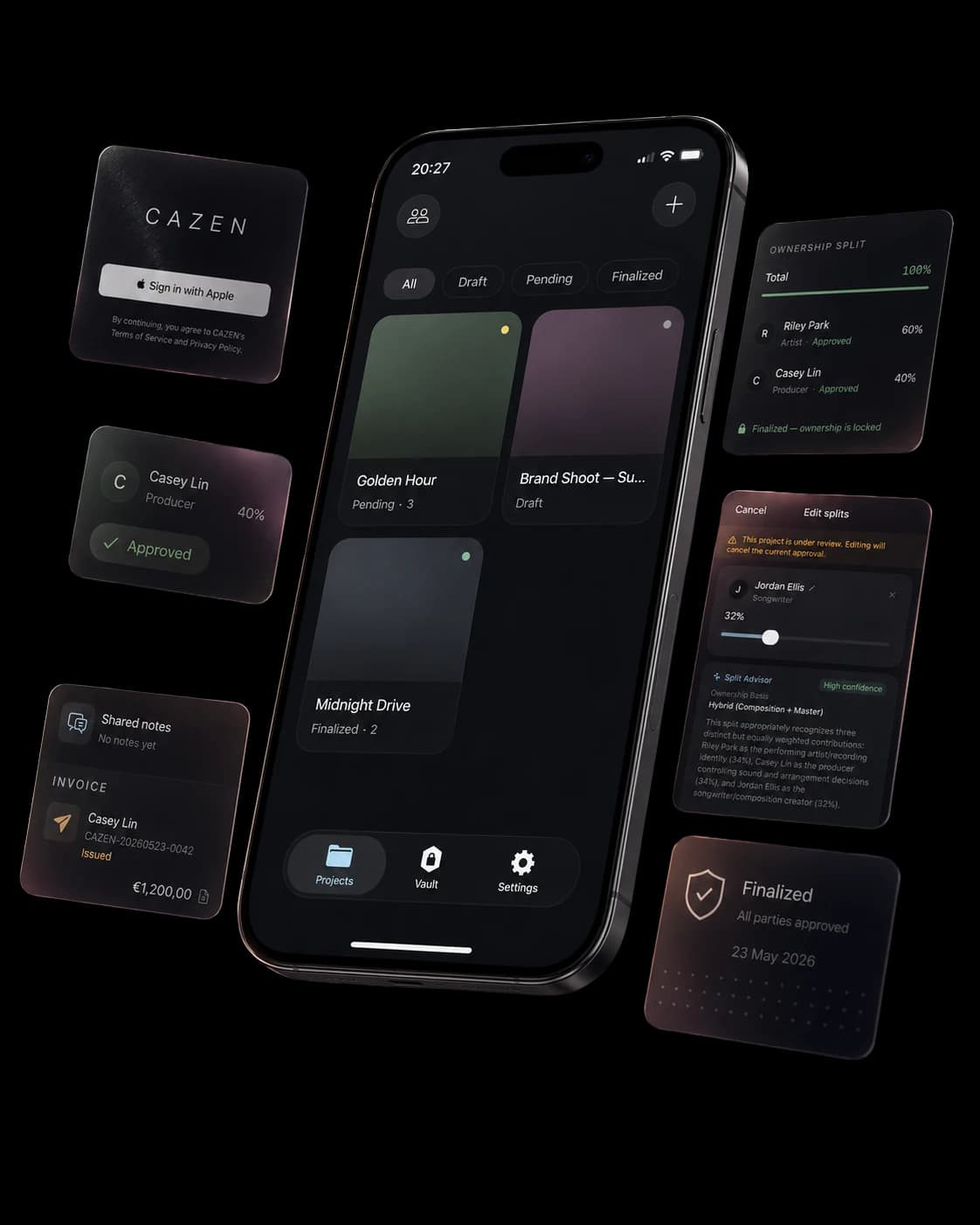
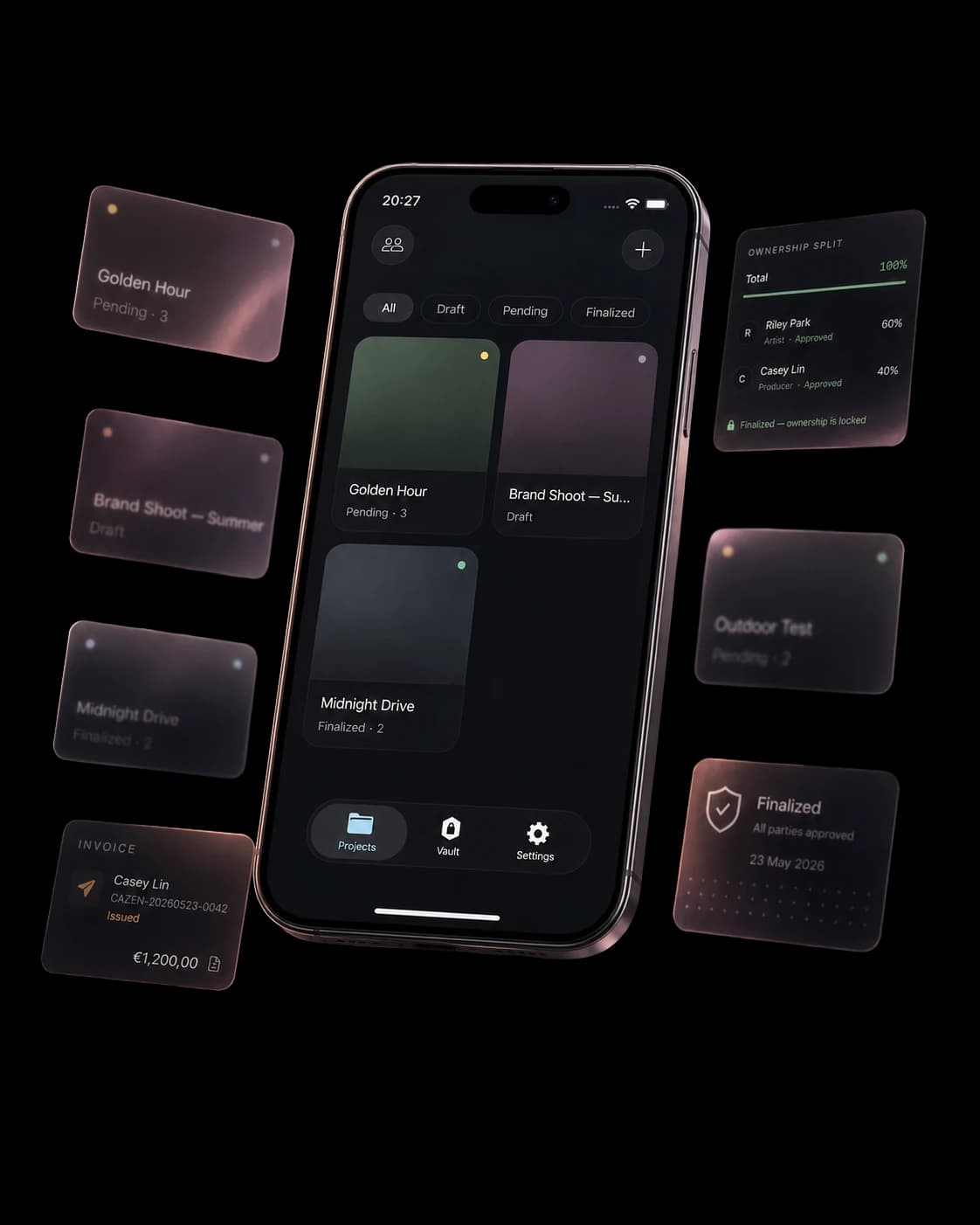
Where the work is tracked
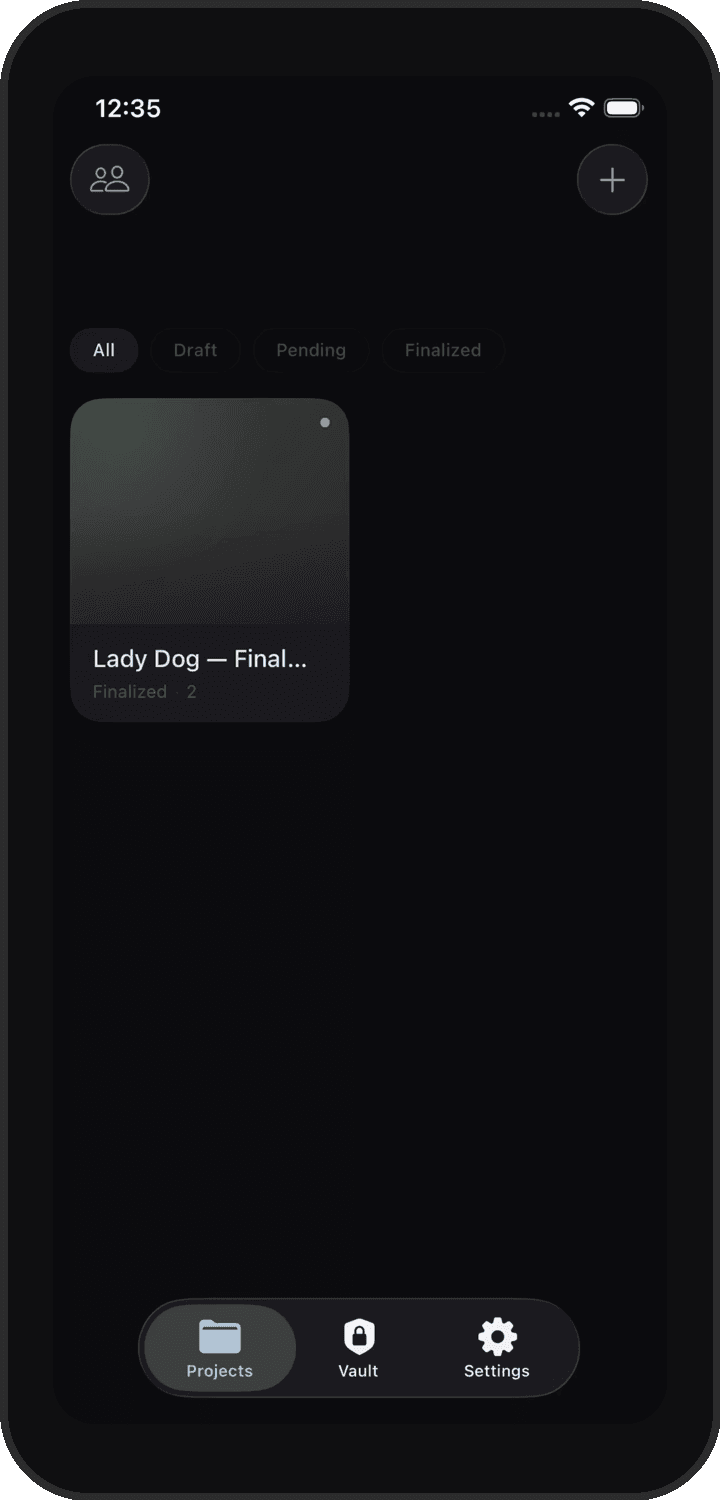
Cazen opens on the work itself. Every project a collaboration has touched, filed by state: draft, pending, finalized. Each card is not a folder of files. It is a rights position, and its label is the honest answer to one question: is this settled yet?
Most collaborations never get this view. The split lives in someone's memory, or a chat thread, until money makes it urgent. Cazen makes it a place you can open before that.
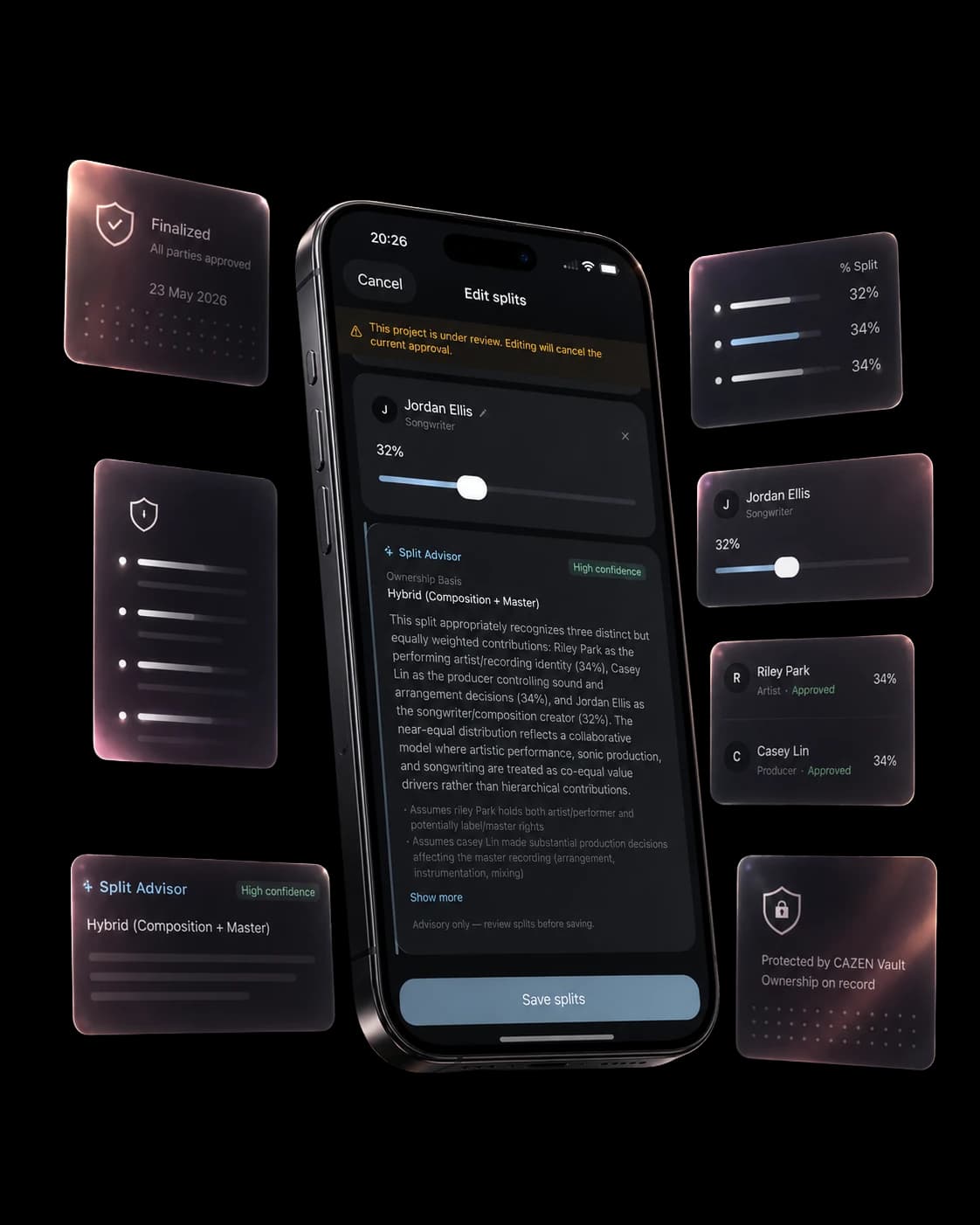
AI as advisor, not authority
The hardest part of any split conversation is starting it. Cazen's advisor proposes a division (here a 33.5 / 66.5 split) reasoned from credits and contribution, with its confidence stated plainly. Then it steps back.
Every number stays on a slider the humans control. The advisor explains; it does not arbitrate. That line, between a tool that drafts and a tool that rules, is the whole design.
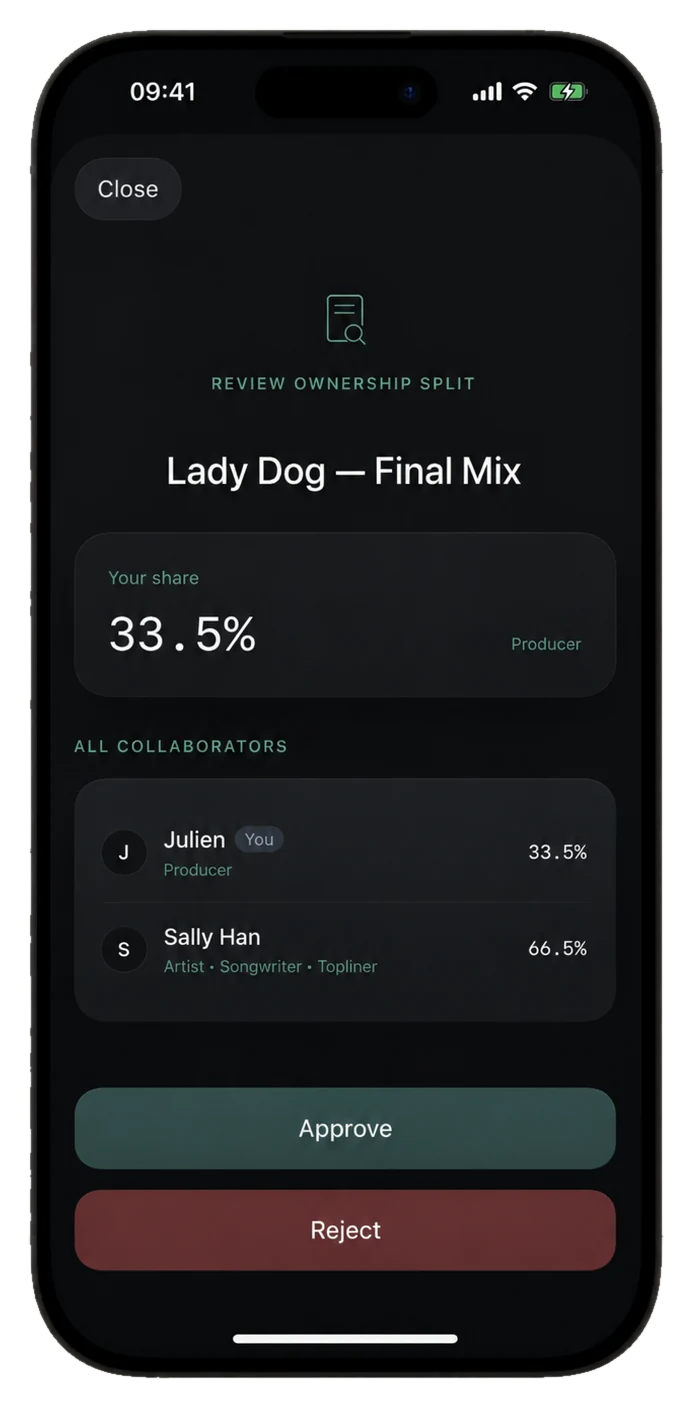
Review as ritual
Approval in Cazen is not a checkbox. Each collaborator sees the split as it stands (their share, everyone else's) and commits with a deliberate Approve or Reject. No silent consent, no buried defaults.
The screen records what was on it at the moment of the decision. Most disputes are not about the work; they are about what each person understood when it began. This is where that understanding gets pinned down.
The moment of execution
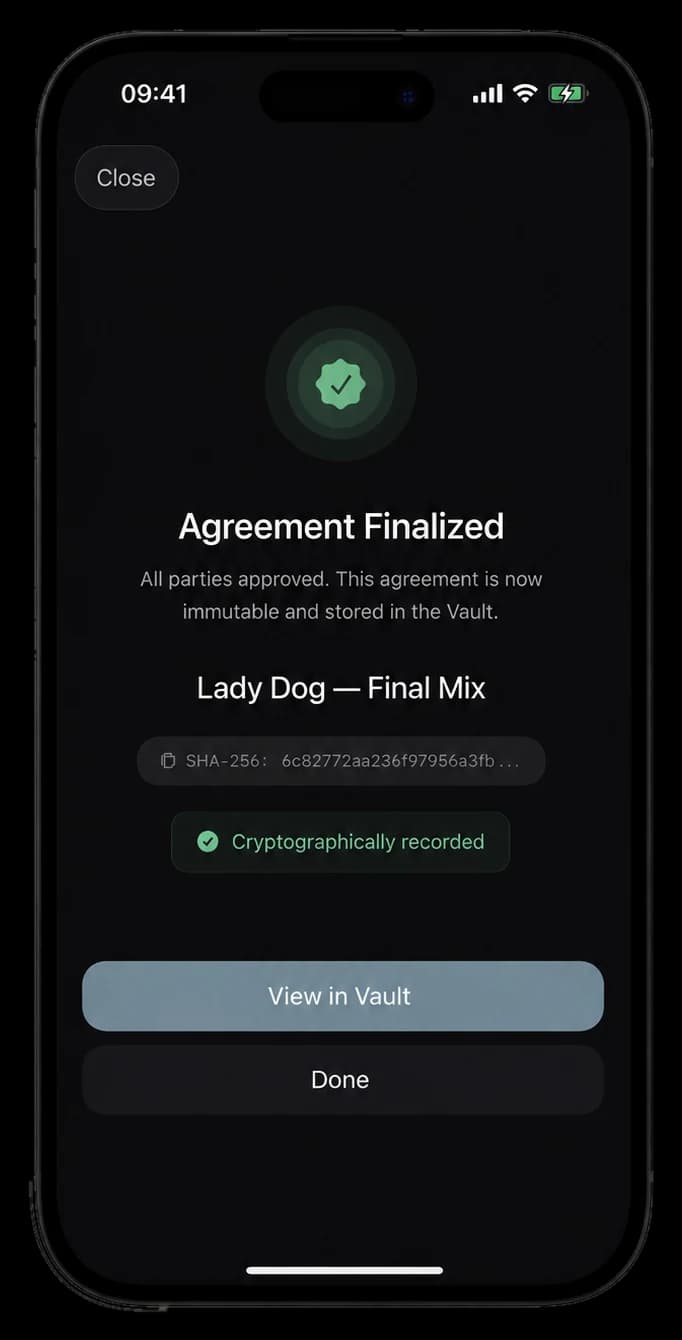
When the last collaborator approves, the agreement finalizes in a single action. The screen is unambiguous: all parties approved, immutable, cryptographically recorded, stored in the vault.
There is no draft state after this, only the record. The product treats that transition as the one that matters, and marks it like it does.
“The dispute is rarely about the work. It is about what was understood when the work began.”
A document, not a screenshot
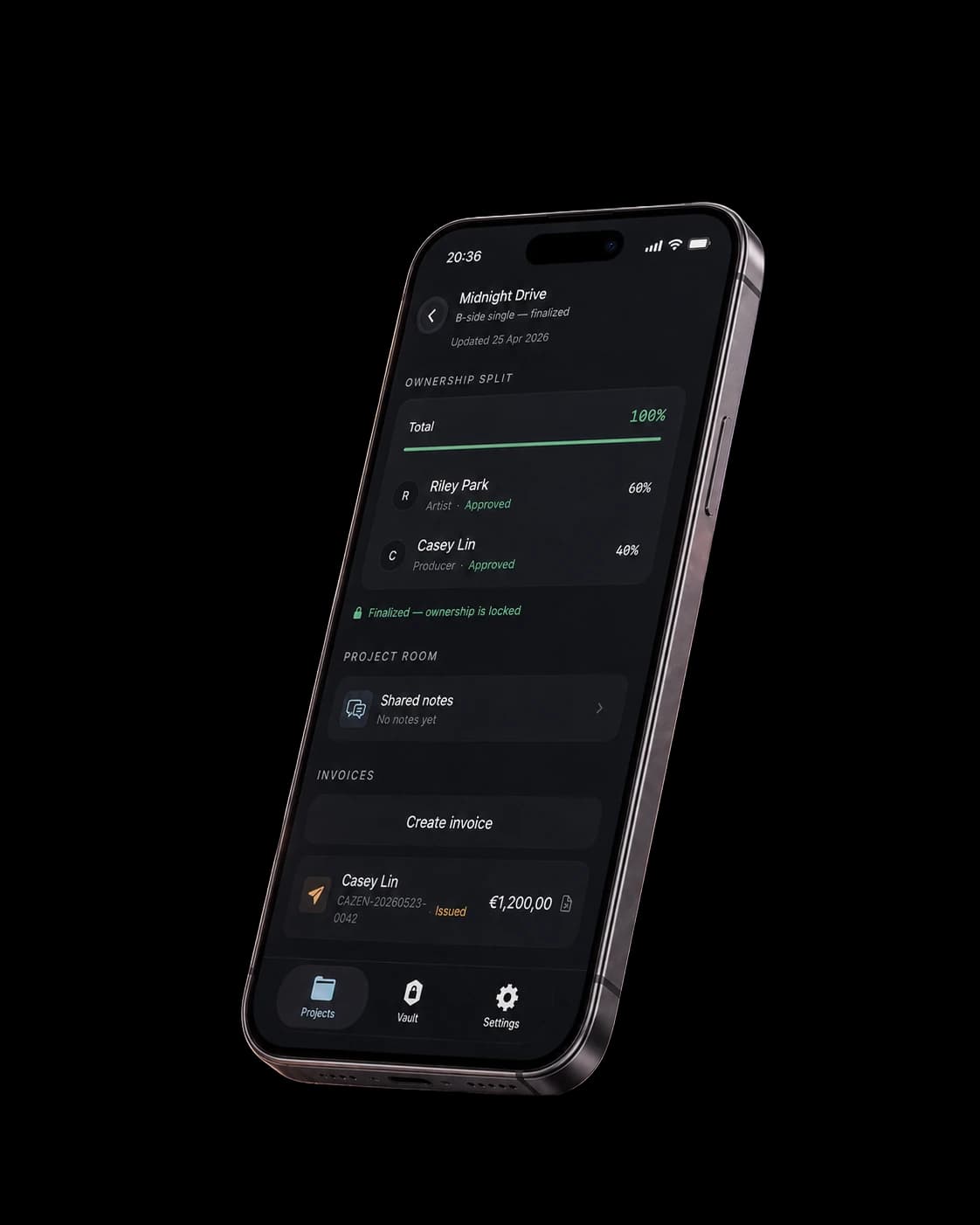
From the finalized record, Cazen generates a real document. A plain page naming the project, the parties, the splits, the date of execution. Something a person can attach to a contract, a label submission, an invoice.
It does not try to look legal. It looks like a record, because that is what it is. The PDF is the artifact a human hands over; the vault behind it is the proof.
Built to be the source of truth
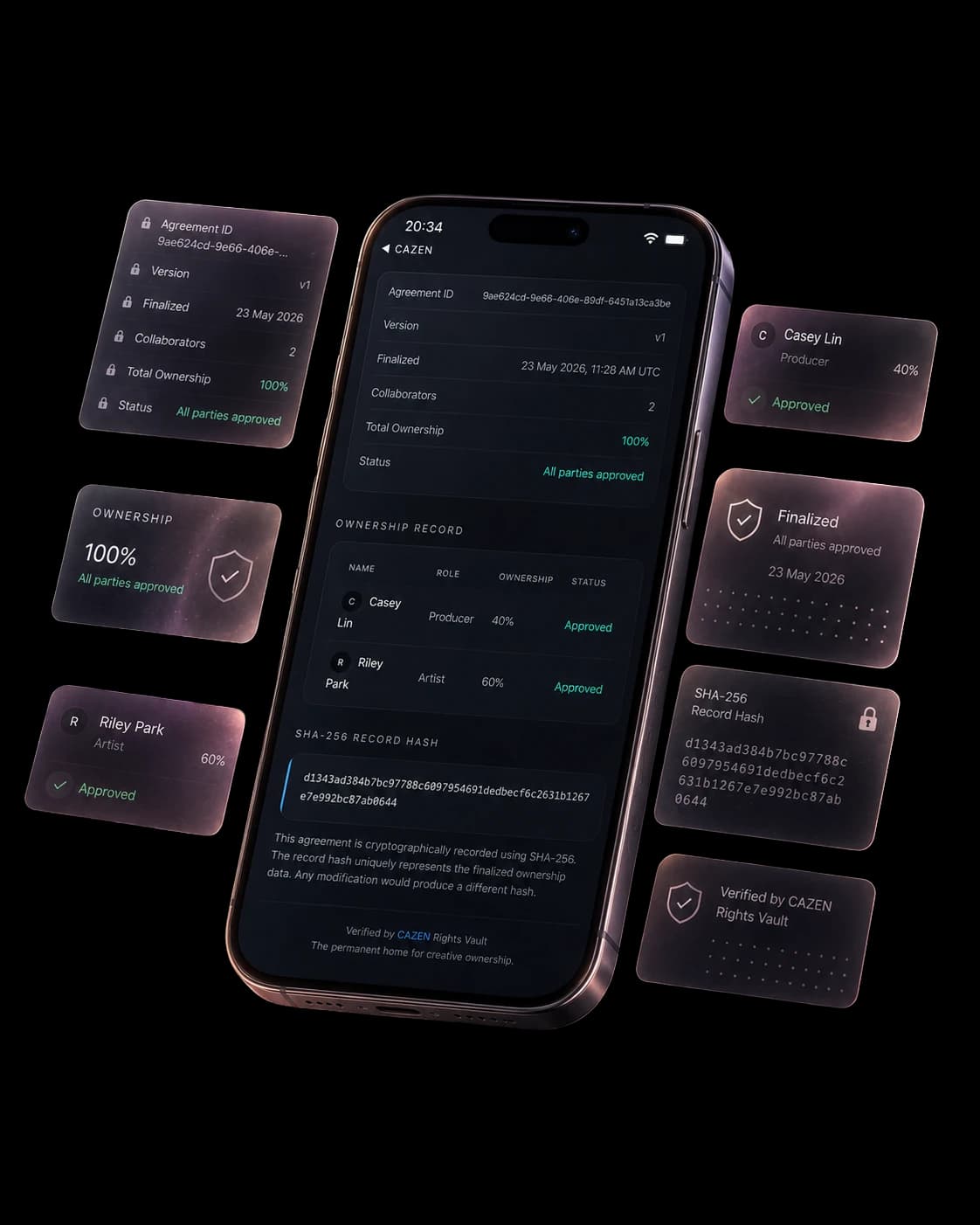
The PDF is the artifact; the vault is the system of record. Every agreement carries its provenance: version, parties, a SHA-256 hash anyone can check. When a label, a manager, or a court asks who owned what, the answer is one record and one verifiable timestamp.
It is also where invoicing begins. Once a split is locked, a per-party invoice is one step away. The vault is not storage. It is the thing the rest of the business gets built on.
The system in motion
A short pass through the full Cazen flow. From the projects list, through the AI-proposed split, to a finalized, vaulted agreement. No narration, no captions on top of the picture. The screen carries the argument.
Plays muted on viewport. If reduced motion is on, the poster image stays put. The single frame already tells the story.
Co-founded. Brand and product built in one month (Q1 2026). In active development.
- Next.js
- Supabase
- Vercel
[ Sizing your own project? ]
Use a quick diagnostic before you build.
Circa
Bring one workflow. Leave with a build plan.
Axyom Studio is fully booked for Q3 and Q4 2026. New projects are currently being considered for Q1 2027.
Prefer email
hello@axyomstudio.com- Availability
- Q1 2027
- Capacity
- 2 engagements
- Based
- Seoul, KR